An Interview on Egypt’s Ambitions in Protected Horticulture with Tycho Vermeulen, Agricultural Counsellor in Egypt
Dutch Greenhouse Delta works closely with the Agricultural Counsellor Network to strengthen international partnerships in horticulture. In this interview, Tycho Vermeulen, Agricultural Counsellor in Egypt, shares his insights into the latest developments in Egypt’s horticultural sector.
This article was originally published by Horti Inside on 14 November 2026.
Major investments in new greenhouse production areas are creating opportunities for technology and knowledge suppliers. “Egyptians can quickly put new knowledge into practice.”
Egypt is investing heavily in the development of modern greeenhouse horticulture. The government is facilitating new agricultural production areas and large-scale greenhouse projects, while private companies are also making substantial investments.
According to Agricultural Counselor Tycho Vermeulen, these developments offer significant opportunities for the Dutch horticulture industry. The challenge is not only to build modern greenhouses, but above all to operate them profitably. Knowledge development and training will play a key role.
Egypt has a rapidly growing population but faces challenges such as limited water resources and the impacts of climate change.
Investment capacity
Egypt has a long agricultural tradition, a large workforce, and a stable government that actively invests in agricultural development. Private companies also have considerable investment capacity. According to Tycho Vermeulen, Agricultural Counselor representing the Dutch Ministry of Agriculture, Fisheries, Food Security and Nature (LVVN), the Netherlands should not underestimate Egyptian entrepreneurship.
“Make no mistake, there are some major entrepreneurs here. They think very differently. Large companies from other sectors are driving these developments. They absorb knowledge very quickly and then, for example, start producing berries on a hundred hectares.”
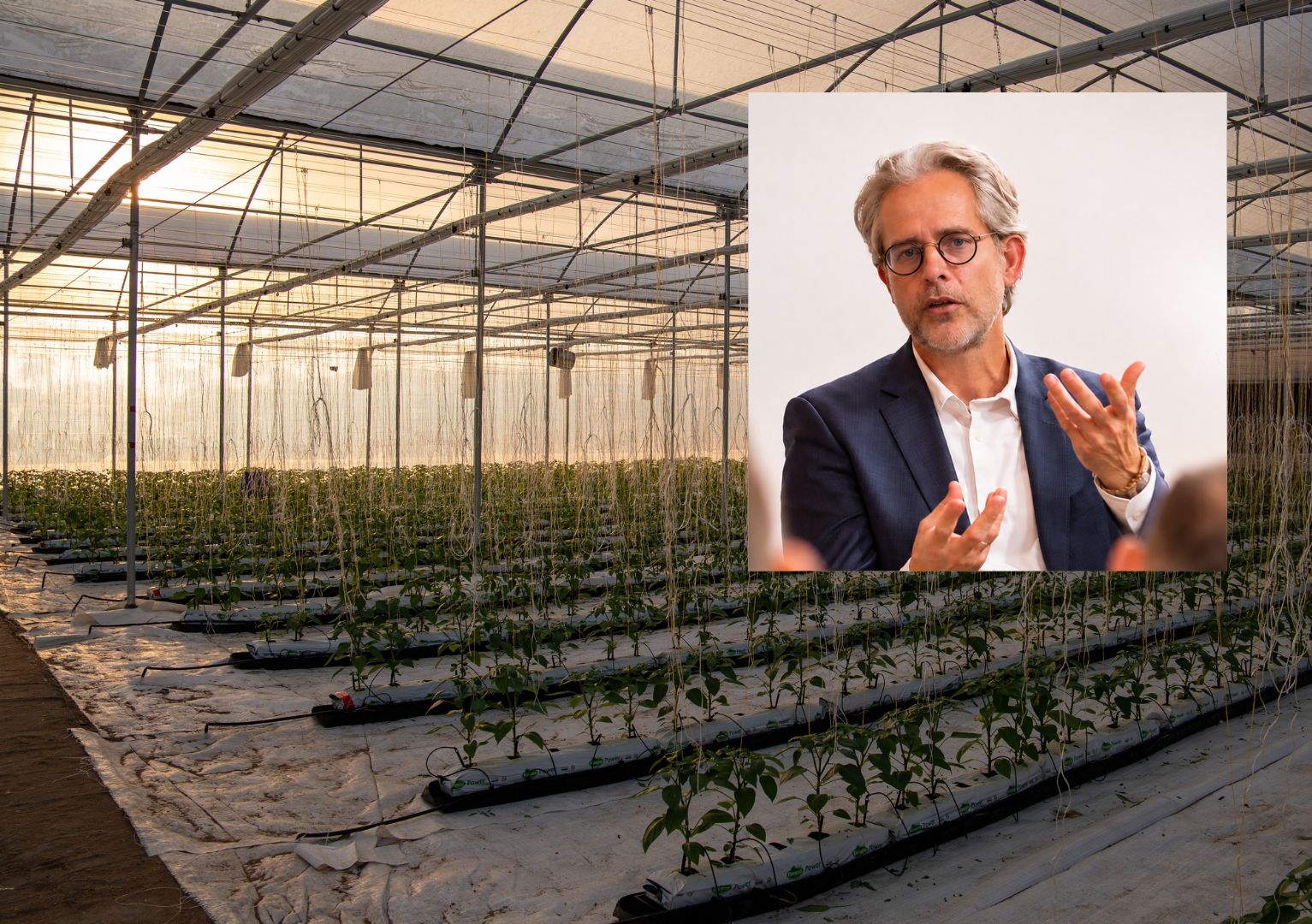
Vermeulen spoke at a Let’s Connect meeting organized by Dutch Greenhouse Delta in Naaldwijk, discussing developments in Egypt and the opportunities for Dutch horticultural companies.
From plastic tunnels to modern technology
Egypt’s protected horticulture sector consists largely of basic plastic-covered greenhouses. According to a market study conducted by Delphy for the Netherlands Enterprise Agency (RVO), Egypt had nearly 109,000 greenhouses in 2020/2021, with major concentrations in the Nile Delta. Dakahlia Governorate alone accounted for more than 53,000 greenhouses.
“At the moment, you mainly see plastic-covered greenhouses. But screens and climate computers will become increasingly interesting. I expect they will quickly realize that these steps are necessary.”
According to Vermeulen, plastic film will remain the dominant greenhouse covering material for the foreseeable future. Soil-based cultivation will also continue to play an important role. However, disease pressure and the need for better climate control will increasingly encourage growers to invest in modern greenhouse technologies.
New Delta Project
In recent years, the Egyptian government has invested heavily in large-scale greenhouse complexes, many of which have been developed with the involvement of state organizations. These projects are intended to strengthen food security, increase exports, and improve the efficient use of water and agricultural land. Examples include Mohamed Naguib, 10th of Ramadan, and Abu Sultan, where thousands of greenhouses have been constructed, mainly using Spanish and Chinese technology.
Meanwhile, new agricultural production areas are being developed. West of the Nile Delta, between Cairo and Alexandria, lies the extensive New Delta Project. Here, desert land is being converted into productive agricultural land, including areas for modern protected cultivation. The water supply infrastructure includes an irrigation system with 28 major pumping stations.
From commodity to high-value markets
Traditionally, Egyptian agriculture has focused strongly on bulk production, benefiting from relatively low labor costs and soil-based cultivation. However, Vermeulen sees opportunities to move into higher-value market segments.
“They really need to find ways to move away from bulk markets. I once attended a seed potato trial involving the Dutch inspection authority NAK. They indicated that Egypt is capable of producing seed potatoes of outstanding quality.” He sees similar potential in horticulture. “If they manage to enter those higher-value market segments, glass greenhouses will also become an interesting option.”
Knowledge determines profitability
One of the major challenges is making optimal use of the new greenhouse complexes. The government has invested substantially in infrastructure, but the expertise and management capabilities required to operate these facilities profitably are not always available. This also creates opportunities for private companies to lease and operate existing greenhouse complexes.
Vermeulen emphasizes that training should be incorporated into these developments from the outset. “You really have to consider the need to train people so that these greenhouses can eventually operate profitably. Egypt has a strong agricultural tradition, and people can learn quickly. We have seen that they can master new techniques in no time.”
Key areas include climate control, irrigation, crop management, and biological crop protection. Dutch companies and knowledge institutions can make an important contribution in these fields.
Putting Dutch expertise into practice
Dutch horticultural companies are already active in Egypt. Cooperation is taking further shape through programs such as Partners for International Business (PIB) and the SOPH Impact Cluster.
The Sustainable Operational Protected Horticulture (SOPH) Center is currently being developed in the Ahmed Orabi area, approximately 25 kilometers from Cairo. A 2,000 m² demonstration greenhouse is being constructed, where Dutch technology will be applied and adapted to local growing conditions.
Organizations and companies involved in the project include Dutch Greenhouse Delta, Delphy, Koppert, Ridder, Rijk Zwaan, Meteor Systems, Svensson, and Jiffy.
“It will be an institution with a physical greenhouse, providing space for workshops and demonstrations. We want to show what is possible with greenhouse horticulture,” Vermeulen explains.
In addition to demonstrations, the center will offer opportunities to train growers, advisors, and students, as well as conduct research into cultivation methods suited to Egyptian conditions.
Financially Self-Sustaining
A key challenge is ensuring that knowledge centers of this kind can eventually operate on a financially sustainable basis. Vermeulen acknowledges that developing a viable business model is difficult. “This is something we, as a government, need to do together with the private sector. Egypt is eager to learn everything it can from the Netherlands, but we need to organize this in a way that also remains attractive to us in the long term.”
He sees opportunities for partnerships with Egyptian companies and educational institutions, including the development of new training programs and curricula.